Info Hub
What is Hoodoo
Hoodoo is a continuation of African spiritual practices brought to the Americas through the transatlantic slave trade. Enslaved Africans, coming from diverse ethnic and spiritual backgrounds (Yoruba, Kongo, Fon, Akan, and others), blended their traditions to create a system of survival. From the eyes of Black people especially those descended from enslaved Africans in the U.S. Hoodoo (also called Rootwork, Conjure, or working the roots) is not just a “folk magic” or superstition as colonial narratives have often painted it. It’s a spiritual technology, survival system, and ancestral tradition born out of African worldviews, shaped by the realities of enslavement, resistance, and resilience.
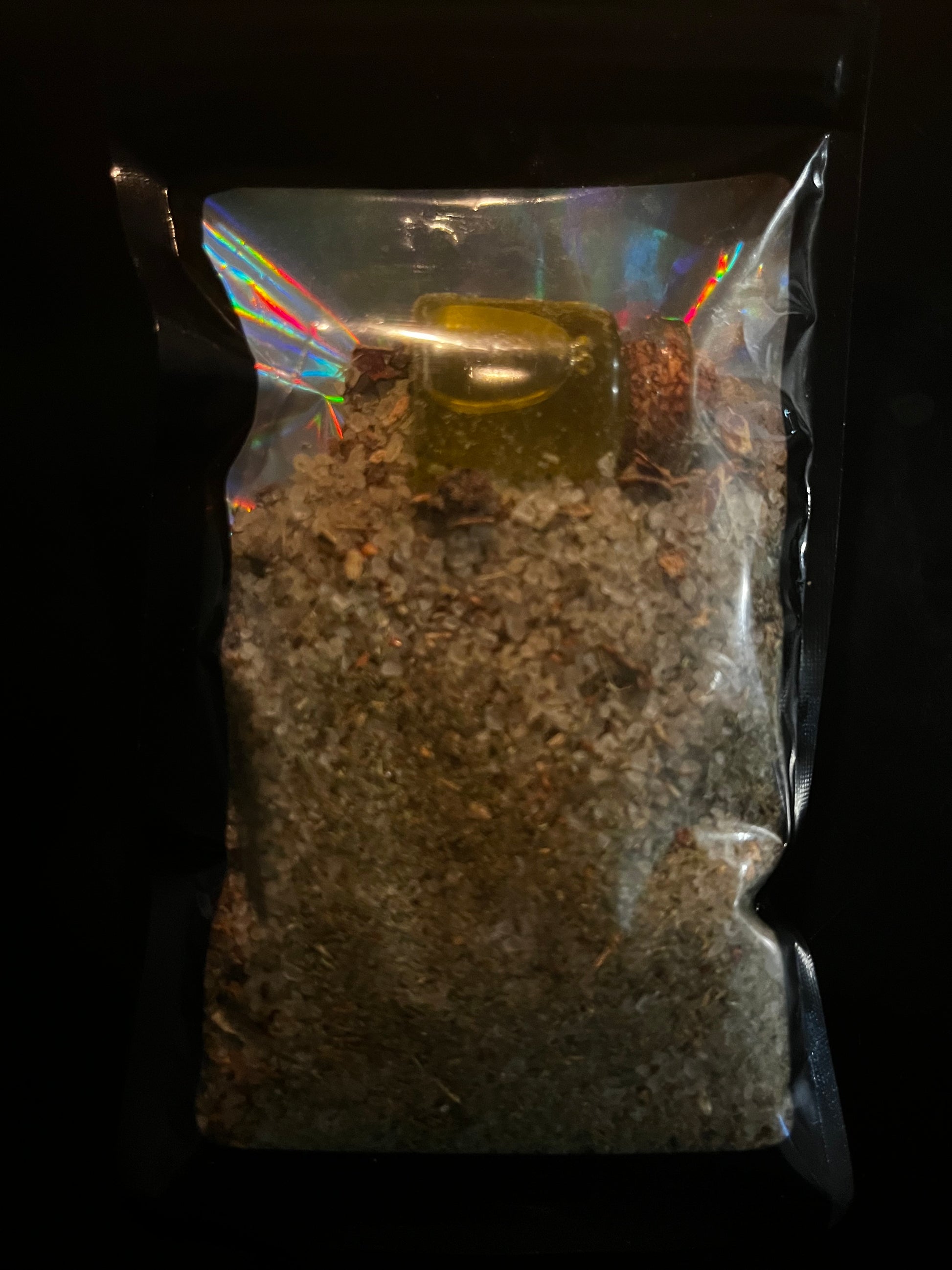
Spiritual Baths
Across nearly every culture and faith, water has been honored as a symbol of life, renewal, and spiritual power. From ancient African and Egyptian purification rites to Roman baths, Hindu ablutions, and Biblical washings, ritual bathing has always been a way to cleanse both body and spirit washing away negativity and restoring harmony.
In many indigenous spiritual practices that predate colonial interactions, there has long been a reverence for water and cleansing. These rituals and concepts have been preserved and transported to the Americas and beyond as a byproduct of the Trans-Atlantic Slave trade. They can be found in everything from African Traditional/Diasporic Religions, such as Ifa, Haitian Vodou, Palo Mayombe, and African American Hoodoo, to the cultural syncretism embedded in Black expressions of Abrahamic religions.
Conjure Oils
Since ancient times, oils have held deep spiritual and ceremonial power. Across cultures from Egyptian temples and Hebrew anointing rituals to African, Mediterranean, and Indigenous practices sacred oils were crafted with herbs, resins, and roots to bless, protect, and connect the physical world to the divine. Anointing with oil marked moments of transformation: kings were crowned, the sick were healed, and spaces were purified.
The origins of these oils trace back to West and Central African spiritual traditions, where oils, herbs, and roots were used for healing, blessing, and invoking spiritual power. By the late 19th and early 20th centuries, conjure oils were a common feature in African American spiritual supply shops. Each oil was crafted for a specific “condition” or intent such as Love Drawing, Money Drawing, Protection, Uncrossing, or Court Case using herbs, roots, and curios believed to hold natural power. Practitioners used these oils to anoint candles, wear on the skin, dress mojo bags, or bless doorways, focusing intention and prayer into tangible form.
What is Mojo?
A prayer, or a song that can be carried with or on the host's body made in a tangible form. Mojo most likely comes from the Kongo word “mooyo,” meaning spirit or life force. Other names for the Mojo include Gris Gris, Hand, Mojo Hand, Conjure Hand, Conjure Bag, Trick Bag, Root Bag, Toby, and Jomo. Cultural retention was illustrated by preserving traditional African beliefs in spiritual power through tangible objects. As enslaved Africans adapted to their new environment in America, they incorporated local materials and customs into their practices, leading to the creation of unique artifacts like Mojo Hands. This blending showcases how they maintained their identity through this esoteric system, while responding to new challenges and influences.
Black City Crossroads
Uncle Bill's Uncrossing Bath
Share